
Tolland County Weekly Arrest Log
Tolland County publishes no official countywide weekly arrest log. The closest local example is Patch reporting built on Troop C information. Those articles group arrests across a stated span, often under a weekly label. They work as news leads. They are not a live roster, fixed archive, or complete government blotter.
Official records stay with the agencies. The State Police release page posts only selected major releases online. It points readers to the local troop. That troop handles other releases. Vernon issues its own municipal police announcements. Mansfield and Tolland rely on resident troopers and State Police channels.
Read Tolland County Arrest Reports
Every multi-day blotter runs on two clocks: the period covered and the publication date. Check both before trusting an item as recent. Patch's representative Troop C Log shows how a news-edited summary reads. Older period-ending pieces show the format, not today's schedule.
- Open the Tolland Patch landing page and locate a clearly dated Troop C or local blotter article.
- Read the headline, publication date, and stated incident span separately.
- Note which police agency supplied each item. Do not assume every town event was handled by Troop C.
- Use the arresting agency for the underlying report, then the Judicial Branch for the later public case.
- Check DOC only when present state custody is the question.
For same-day confirmation routes, see the Daily Arrest Report. That page does not repeat the multi-day news archive or promise any 24-hour feed.
Tolland Arrest Log Fields
Patch's historic Tolland and Troop C blotters use a recognizable field set. Not every article carries every field. Editors leave details out when they choose. Later legal changes rarely get added to an old item.
| Field | How to interpret it |
|---|---|
| Incident or arrest date | The reported event date, which may differ from publication. |
| Name, age, town | Identifiers as the agency or article published them, subject to correction. |
| Charge | The charge at that point, not a conviction or final disposition. |
| Bond | A reported release condition at that stage, which can later change. |
| Court date | A scheduled appearance, best checked against the court docket. |
| Processing or agency | The troop or department associated with the item. |
| Photo | Sometimes present in an individual story, never proof of a complete gallery. |
Cases can change after booking. A later docket may show a dismissal, a nolle, erasure, a plea, or a trial result.
Weekend Tolland Arrest Posting
Weekend and holiday arrests often get grouped after the fact. Staffing, agency release habits, and newsroom timing all play a part. The incident date and the publication date drift apart. The gap can stretch for days. Neither Troop C nor Patch promises a fixed weekly posting hour. To them, "weekly" is not a government schedule. It describes search intent.
Work backward by date first. Then verify forward through official records. For a State Police matter, ask Troop C whether it handled the event. Then use the DESPP report process. Vernon goes through Vernon Police Records. Once a docket exists, the Judicial Branch criminal lookup can display public case status. It is a public-service tool, not the clerk file or a custody tracker.
The Tolland State's Attorney court page lists thirteen municipalities in the district. Rockville GA-19 Part B handles many misdemeanors, infractions, and motor-vehicle matters. Part A takes the serious felonies. That court path completes the picture an arrest log leaves behind.
Tolland Arrest Archives
Patch pages stay searchable long after their period ends. Tolland County has no stable, complete arrest archive online. For deep history, the Connecticut State Library's State Archives and its finding aids hold state records. What agencies must keep is a separate question from what stays online.
The public-safety retention schedule covers arrest and booking sheets, reports, notes, and evidence logs inside case-investigation files. The M7-450 no-death category is generally kept at least ten years. That runs from the report date, subject to the current schedule, authorized destruction, and erasure rules. Confirm the exact item with the records officer.
Online access can end before retention does. The reverse happens too. A news article or private copy can outlive an official record that got corrected or erased. Save the article date, the covered period, the source agency, and the URL. Then ask the custodian for the current releasable record.
Note: The old jail at Tolland Green is a museum and historical site, not a current custody office or arrest archive.
Patch and Troop C Arrest Coverage
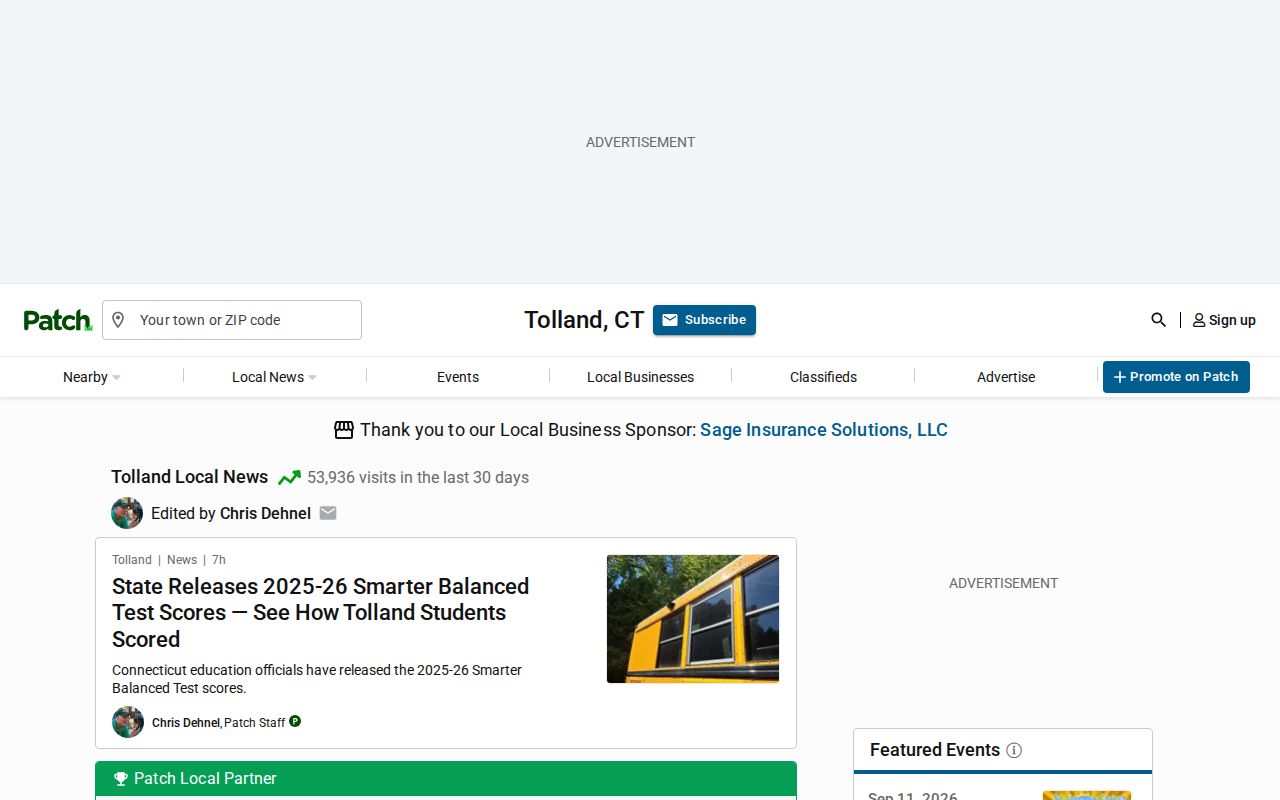
Patch sits behind official sources. Its Tolland archive still gives the clearest local view of multi-day reporting. Historic entries may carry a name, age, town, charge, bond, court date, and processing reference. A few high-interest stories include a photo. Ordinary blotters do not form a mugshot gallery. The Patch Tolland landing page mixes arrest items into the wider local news feed.
Private sites add another layer. RecentlyBooked runs a county-level page whose sheriff and county-facility wording conflicts with Connecticut's actual official structure. Treat it as a lead rather than an authority. Official agency records come first.
Tolland Arrest Trends and Names
The State Police Crime Data Repository and a Patch news log answer two different questions. The repository gathers reported crime and arrest statistics from participating agencies, going back to 2014. Its data carries quality limits. It works for long-range comparisons. It names no one arrested. A news log selects individual cases instead of measuring the Tolland County trend, so an editorial story run and a statewide data series cannot be mixed.
Statistics show patterns; the arresting agency handles the report; the court handles the outcome. The multi-day Troop C article shows the period-summary format.
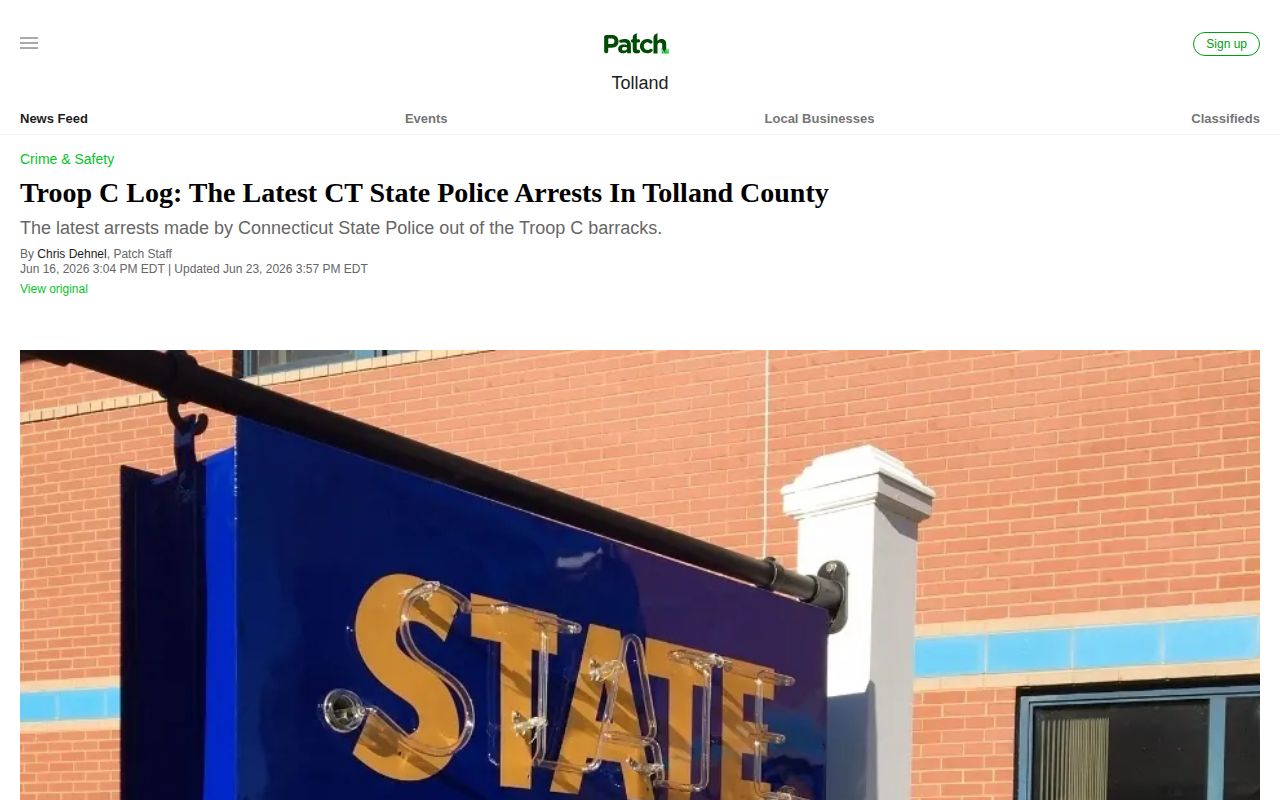
The page is a dated news account rather than a complete official arrest roster.
Tolland Arrest Enforcement Releases
State Police releases sometimes announce enforcement operations instead of listing ordinary bookings. One historical Troop C release described a DUI spot check on Route 195 in Tolland. That shows an agency flagging a focused safety push. It does not prove the event recurs. Nor does it list every related arrest.
Read operation releases in their dated context. Keep a planned checkpoint notice, an after-action account, and a person's arrest report separate. None of them replaces a current weekly log. The distinction matters because search results can surface an old agency page beside a new Patch story.
The countywide record routes, custody stages, and photo limits sit on the Tolland County recent-arrests hub.